
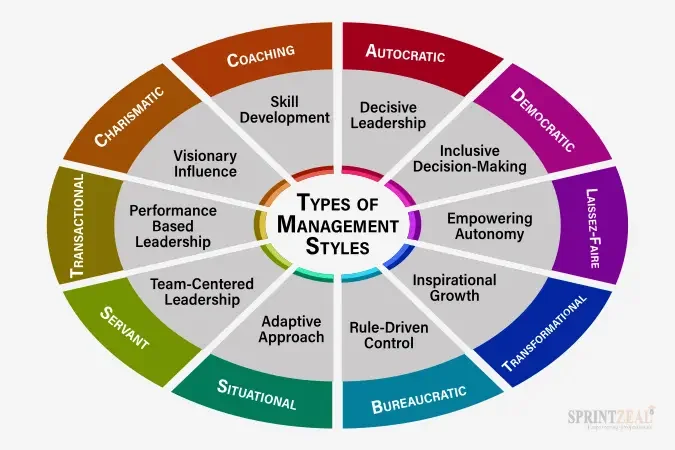
10 Types Of Management Styles With Pros Cons

Management style is leverage. It decides whether your team moves fast… or slowly dies in meetings, confusion, and politics.
Most leaders don’t “choose” a style — they default to whatever their personality does under pressure. That’s why outcomes swing: one month you’re flying, the next month your best people are quiet quitting.
This is a clean breakdown of 10 common management styles with pros/cons, plus when they actually work (especially in UK/Ireland teams where expectations around autonomy, clarity, and fairness matter). :contentReference[oaicite:0]{index=0}
Use this rule: the best managers don’t pick one style for life — they pick the style that fits the moment, then switch before it breaks the team.
1) Autocratic (Command & Control)
What it is: You decide. Others execute. Minimal input. :contentReference[oaicite:1]{index=1}
- Pros: fast decisions, clear direction, useful in crises and tight deadlines
- Cons: kills ownership, lowers retention, invites passive resistance
- Works best when: safety issues, emergency response, “we ship today” scenarios
- Breaks when: you run it as the default culture (people stop thinking)
2) Democratic (Participative)
What it is: Team input shapes decisions, leader makes final call. :contentReference[oaicite:2]{index=2}
- Pros: higher buy-in, better ideas, stronger morale
- Cons: slower decisions, can drift into endless debate
- Works best when: product/process improvements, planning, creative work
- Breaks when: no one knows who owns the final decision
3) Laissez-Faire / Delegative (Hands-Off)
What it is: You set outcomes, then get out of the way. :contentReference[oaicite:3]{index=3}
- Pros: autonomy, speed for senior talent, encourages initiative
- Cons: chaos with juniors, unclear priorities, uneven standards
- Works best when: strong operators, clear KPIs, high trust
- Breaks when: “hands-off” becomes “not present”
4) Transformational (Change & Growth)
What it is: You lead with vision, raise standards, push change, develop people.
- Pros: high motivation, innovation, strong culture when done right
- Cons: can burn people out, can ignore details/operations
- Works best when: scaling, turnarounds, culture rebuilds
- Breaks when: vision isn’t backed by systems
5) Transactional (Rules, Rewards, Performance)
What it is: clear targets + clear consequences (reward/penalty).
- Pros: predictable output, strong for compliance and repetitive work
- Cons: limits creativity, can feel cold/robotic
- Works best when: ops teams, production, service-level environments
- Breaks when: you try to “incentive” everything and kill intrinsic motivation
6) Coaching (Developer)
What it is: you treat performance as trainable — feedback, skill-building, progression.
- Pros: builds talent, improves retention, creates future leaders
- Cons: time-heavy, weak if you avoid hard accountability
- Works best when: growing teams, new managers, skill gaps
- Breaks when: coaching becomes “therapy” instead of performance improvement

7) Servant Leadership (People-First)
What it is: you remove obstacles, support the team, put people first while protecting standards.
- Pros: trust, loyalty, strong culture, high psychological safety
- Cons: can look “soft” if accountability is missing
- Works best when: knowledge work, retention-critical teams, long-term culture building
- Breaks when: you serve feelings more than outcomes
8) Bureaucratic (Process & Policy)
What it is: processes, procedures, approvals, standards before speed.
- Pros: consistency, risk control, good for regulated environments
- Cons: slow, rigid, frustrates high performers
- Works best when: legal, compliance, safety, finance-heavy environments
- Breaks when: the process becomes the purpose
9) Charismatic (Influence-Driven)
What it is: leadership powered by personality, conviction, energy.
- Pros: rallying effect, strong momentum, great for launches and morale
- Cons: dependency on one person, blind spots get ignored
- Works best when: early-stage teams, crisis confidence, major change
- Breaks when: charisma replaces systems and truth
10) Situational (Adaptive)
What it is: you switch styles based on the person, task, and risk level (the most “real world” approach). :contentReference[oaicite:4]{index=4}
- Pros: flexible, high performance, reduces mismanagement
- Cons: requires self-awareness, can look inconsistent if you don’t explain the “why”
- Works best when: mixed-skill teams, fast-changing priorities
- Breaks when: you switch styles randomly instead of intentionally
How to choose the right style (fast):
- High risk / low time: autocratic or transactional (then debrief later)
- High skill / high ownership needed: delegative + coaching
- Change / growth phase: transformational + coaching
- Creative problem-solving: democratic (with a clear decision owner)
- Regulated / safety-critical: bureaucratic + transactional
UK/Ireland reality check: teams here typically tolerate “strong leadership” if it’s fair, consistent, and explained. They don’t tolerate chaos, favourites, or vague expectations. If you want loyalty, your standards and your behaviour have to match.
Bottom line: your management style is a growth strategy. Pick the wrong one and you’ll cap output, burn talent, and spend your life firefighting. Pick the right one and performance becomes predictable.
10 Best Analytics Tools For Websites

Most businesses don’t have a traffic problem. They have a measurement problem.
They’re looking at numbers that feel “professional”… but don’t answer the only questions that matter:
- Which channel makes money?
- Which pages create buyers?
- Where are leads leaking?
- What should we change next?
If you want your site to stop being a brochure and start acting like a machine, you need the right analytics stack — not 17 dashboards you never open.
Quick rule: one tool tells you what happened, another tells you why, and a third tells you where to attack first.
Here are 10 essential website analytics tools (the core set we see used properly by operators who scale in the UK/Ireland without guessing).
1) Google Analytics (GA4)
The foundation. GA4 tells you where traffic comes from, what people do, and what actions they take (forms, purchases, key clicks). If GA4 isn’t configured with clean conversions, every other tool becomes noise.
- Use it for: traffic sources, landing pages, conversions, basic funnels
- DM move: define “money events” first (lead submit / click-to-call / booking) and build reports around them
2) Hotjar
GA tells you what happened. Hotjar shows you why it happened. Heatmaps and session recordings let you watch real users struggle, hesitate, rage-click, or drop off before converting.
- Use it for: page friction, scroll depth, UX bottlenecks, form drop-off
- DM move: tag recordings by key pages (service page, pricing, lead form) and fix the top 3 friction points first

3) SEMrush
If search is a battleground, SEMrush is the recon. It helps you understand keyword positions, SEO opportunities, competitor content, and technical issues that throttle visibility.
- Use it for: keyword research, competitor analysis, site audits, content opportunities
- DM move: stop chasing random keywords — target the ones that match buyer intent in your geo (UK cities/regions)
4) Ahrefs
The backlink and authority lens. Ahrefs is brutal for seeing why competitors outrank you and what links/pieces of content actually drive SEO growth.
- Use it for: backlinks, content gap, top pages, broken link fixes
- DM move: build pages that deserve links (proof, case studies, comparison pages) then earn links systematically
5) Matomo (formerly Piwik)
If you care about privacy, ownership, and tighter control of data — Matomo is a strong alternative to GA. Useful for orgs that want more control in GDPR-heavy environments.
- Use it for: privacy-first analytics, self-hosted tracking, controlled data handling
- DM move: pair privacy-safe measurement with clean lead tracking so your reporting still drives decisions
6) Crazy Egg
Another behaviour layer: heatmaps, scrollmaps, and A/B testing. It’s built for conversion rate improvement when you’re iterating landing pages fast.
- Use it for: testing layouts, CTA placement, page interaction patterns
- DM move: test one change at a time (headline OR offer OR CTA), not five things at once
7) Kissmetrics
For businesses that need user-level behaviour insights over time (retention, repeat actions, and lifecycle). Think less “sessions”, more “people and journeys”.
- Use it for: customer journey tracking, cohorts, retention, LTV-style insights
- DM move: identify the actions that predict a buyer, then optimise to increase those actions
8) Moz Pro
Solid SEO toolkit for tracking rankings, audits, and on-page improvements. The value is consistency: it keeps SEO work visible and measurable instead of “we posted blogs and hoped”.
- Use it for: rank tracking, site crawls, on-page guidance, link insights
- DM move: track rankings at the geo level (UK/Ireland locations) and map them to lead volume, not vanity
9) Clicky
Real-time analytics with a simple dashboard. Useful when you want fast visibility into what’s happening right now (campaign spikes, sudden traffic changes, outages).
- Use it for: real-time monitoring, simple reporting, fast sanity checks
- DM move: use it as a “smoke alarm”, not your main brain
10) Piwik PRO
A privacy-focused analytics suite aimed at businesses that need strong compliance posture (common in regulated industries). If you’re serious about governance, it’s a contender.
- Use it for: privacy-first enterprise analytics, governance, compliance-heavy environments
- DM move: pick a stack you can actually maintain — compliance is pointless if tracking breaks every month
What most people get wrong (and why they stay stuck):
- They track traffic, not actions.
- They don’t define conversions cleanly.
- They don’t connect behaviour tools to revenue outcomes.
- They don’t separate UK/Ireland geo performance (everything gets lumped together).
The simplest “serious” setup (for most sites):
- GA4 for the truth of what’s happening
- Hotjar (or similar) for why people don’t convert
- One SEO tool (SEMrush or Ahrefs or Moz) to win visibility
UK/Ireland geo note: if you sell locally, your reporting should be geo-specific. “Traffic up” means nothing if the increase is outside your service area. Segment by region/city and measure leads by location, not just sessions.
Bottom line: tools don’t scale you — decisions do. Your analytics stack should force better decisions, faster.
10 common mistakes people make when setting up google analytics.
Most Google Analytics setups don’t fail because GA4 is “hard”. They fail because people install it, see numbers, and assume it’s telling the truth.
If your tracking is wrong, every decision becomes a gamble — ads, SEO, landing pages, even what you think your best channel is. Here’s the short list of the most common GA4 setup mistakes that quietly wreck your data (and how to fix them fast).
1) Duplicate tracking (inflated numbers)
This is the silent killer: GA4 installed twice, a plugin injecting another tag, or GTM + hardcoded tracking both firing. Result: inflated sessions/pageviews, double events, messy attribution.
Fix: Use Tag Assistant + GTM Preview. Confirm your GA4 config fires once per page. If you see duplicates, remove one implementation and standardise.
2) You haven’t defined conversions (so GA becomes a vanity dashboard)
If you don’t define “money actions”, GA becomes traffic trivia. You can’t optimise what you haven’t named.
Fix: Decide what a win is for your site (lead form submit, click-to-call, booking request, checkout purchase). Create events (best through GTM), then mark the right ones as conversions.
3) Internal traffic is poisoning your data
You, your team, developers, agencies, people testing pages — all of it skews your reports. Suddenly your top pages look better than they are and your conversion rate lies.
Fix: Set up internal traffic rules in GA4 Admin and filter them. Re-check this after office moves, internet provider changes, or dev work.

4) Wrong property structure (everything mixed together)
Common mess: multiple brands in one property, mixed domains, mixed regions, mixed goals. It muddies every report and makes comparison impossible.
Fix: Keep your GA4 properties clean. One business/site per property unless you have a deliberate reason. Name them clearly (e.g., Brand | Web | UK / Brand | Web | IE).
5) You’re not using Tag Manager (or you’re using it badly)
Hardcoding everything makes changes slow and risky. Bad GTM use creates tag chaos and breaks tracking when anyone touches the site.
Fix: Centralise tracking in GTM, document your tags/triggers, and use Preview mode before publishing. Keep a simple naming convention so your container doesn’t become spaghetti.
6) Missing referral exclusions (attribution gets wrecked)
Payment gateways, booking tools, and third-party checkouts can “steal” credit by turning your returning users into fresh sessions from a new referral source.
Fix: Add key third-party domains to referral exclusions and test the full journey end-to-end (landing page → conversion). Make sure the original source sticks.

7) Consent + privacy is misconfigured (UK/Ireland reality)
If your cookie banner/consent flow is miswired, you can end up firing tags when you shouldn’t — or blocking tracking when you shouldn’t. Either way: your data becomes unreliable and you risk compliance issues.
Fix: Test both “accept” and “reject” flows. Confirm tags behave properly. If users change preferences, ensure your consent state updates correctly.
8) Data retention is too short (so you lose history)
If your retention window is tiny, you’re constantly working with a short memory. That kills long-term analysis and makes seasonality look like chaos.
Fix: Set retention to the longest option you can justify for your business. If you need deeper history, store key events elsewhere (export).
9) You’re accidentally tracking PII (risk)
Emails, phone numbers, names, or full addresses sneaking into URLs or event parameters can create real risk and headaches.
Fix: Audit URL parameters. Strip personal data. Ensure forms don’t pass PII into tracking. Lock down who has access to Analytics.
10) You never QA the data (so you trust ghosts)
Most setups go live and never get tested again. Then dev updates ship, plugins change, templates update… and tracking silently breaks.
Fix: Do a monthly “tracking health check”: confirm tags fire once, conversions trigger, consent works, and attribution hasn’t gone weird (spikes in Direct, sudden conversion drops, strange referral sources).

Bottom line: GA4 isn’t there to report numbers. It’s there to tell you what makes money. If your setup can’t answer:
- Where do my best leads come from?
- Which pages push people to enquire or buy?
- Which channels are profitable (not just loud)?
- What should I change next?
…then your setup isn’t finished. It’s installed.

Best Podcast Apps for Android & iPhone (2026): 12 Picks + UK & Ireland Tips

If you just want the answer: iPhone → Apple Podcasts (simple + built-in). Android → Pocket Casts (best all-rounder). If you lived on Google Podcasts → YouTube Music is the migration path.
Most people pick the wrong podcast app for one reason: they choose based on “what’s popular” instead of how they actually listen — offline, in the car, at the gym, or in short bursts between jobs.
What to look for (quick checklist):
- Offline downloads that don’t fail + auto-delete after listening
- Queue / Up Next so you’re not hunting episodes
- Playback tools (silence trim, smart speed, per-show speed)
- CarPlay / Android Auto if you commute
Best podcast apps (2026 picks):
- Apple Podcasts (iOS): built-in, solid downloads, easy discovery.
- Pocket Casts (iOS/Android): best balance of queue + control.
- Spotify (iOS/Android): easiest if you already use Spotify daily.
- YouTube Music (iOS/Android): best “Google Podcasts replacement” path.
- Overcast (iOS): smart listening features, great for heavy spoken audio.
- Podcast Addict (Android): maximum customisation if you want control.
- Audible (iOS/Android): best if you want podcasts + audiobooks together.
- BBC Sounds (UK): strong for BBC shows + radio alongside a main podcast app.

UK & Ireland tip: if you listen on the road, prioritise reliable offline downloads + CarPlay/Android Auto support. Also keep a “broadcast app” (BBC Sounds) alongside a dedicated podcast app if you follow UK radio/podcasts heavily.
Quick FAQ:
- Best podcast app for iPhone? Apple Podcasts for simple; Overcast if you want smarter listening control.
- Best podcast app for Android? Pocket Casts for most; Podcast Addict if you want maximum customisation.
- What replaced Google Podcasts? YouTube Music (Google migrated podcasts there).
1&1 Domain Review (IONOS): What You’re Really Paying For
By Dominating Markets

Choosing a domain provider looks simple on the surface — until you realise how tightly it connects to performance, control, scalability, and long-term growth.
1&1 (now branded as IONOS) is one of the most well-known domain providers in Europe. But popularity doesn’t always equal suitability.
What Is 1&1 / IONOS?
1&1 IONOS is a long-established hosting and domain provider offering:
- Domain registration
- Shared and cloud hosting
- Email hosting
- Website builders
- Business tools for SMEs
It’s positioned as an all-in-one solution — which is both its strength and its weakness.
1&1 Domain Pricing: The Real Cost

IONOS domains are often advertised at extremely low introductory prices. The issue is not the first year — it’s what happens after.
What to Watch For
- Introductory pricing that renews much higher
- Add-ons bundled automatically
- Email and SSL upsells
For non-technical users, this can quietly inflate costs without adding real value.
Domain Management & Control
Domain management inside IONOS is functional but not lightweight. There are multiple dashboards, nested settings, and product cross-links.
For a solo business owner, this can feel overwhelming. For agencies or technical teams, it’s simply inefficient.
DNS, Speed & Reliability

From a technical standpoint, IONOS DNS is reliable. Downtime is rare, and global infrastructure is solid.
However, DNS speed alone does not win markets. It’s only one part of a much larger system.
Email & Bundled Services: Helpful or Harmful?
IONOS heavily promotes email hosting with domain purchases. While convenient, this can create lock-in.
Businesses that later want to migrate systems often face:
- Email migration headaches
- Dependency on bundled products
- Unnecessary complexity
Who 1&1 Domains Are Best For
IONOS domains make sense if:
- You want everything in one place
- You value phone support
- You are running a simple, static site
Who Should Avoid Them
They are not ideal if:
- You plan to scale aggressively
- You use specialised tools (CRM, funnels, automation)
- You want full system flexibility
Our Take at Dominating Markets
Domains don’t create growth — systems do. The provider matters less than how the domain fits into your wider infrastructure.
We regularly see businesses obsess over tools while ignoring positioning, messaging, and conversion mechanics.
Final Verdict: Is 1&1 Worth It?
1&1 IONOS is not bad — but it’s rarely optimal. It’s safe, familiar, and convenient.
For businesses that want to dominate competitive markets, infrastructure decisions should support flexibility and scale.
Build a Growth System — Not Just a Website
Domains, hosting, ads, content — none of it works in isolation. We design systems that turn infrastructure into profit engines.
Book a Free Discovery Call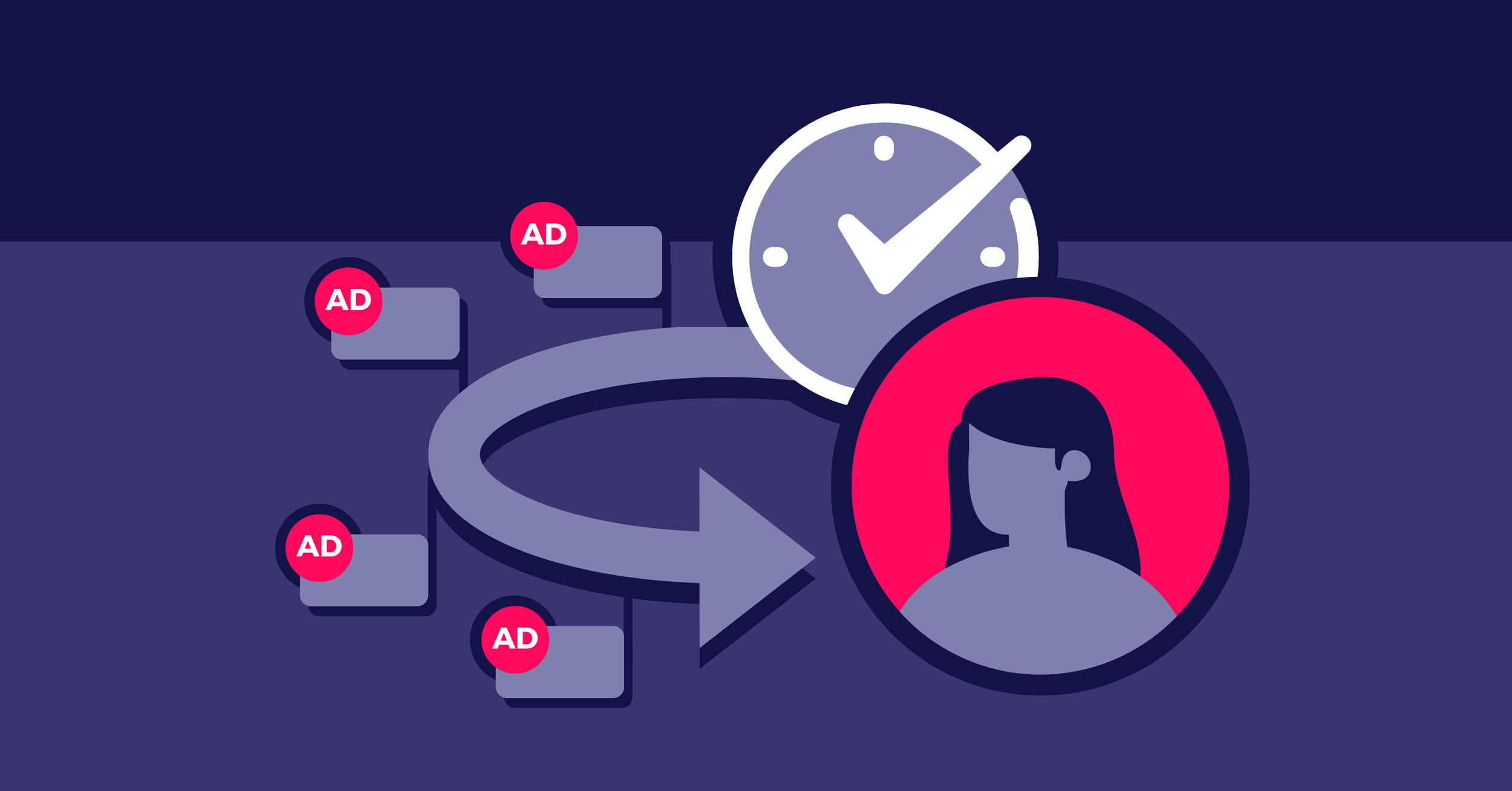
Ad Frequency Too High? What It Really Means
Most ads don’t fail because of bad targeting or weak copy.
They fail because they’re shown too often, to the wrong stage of awareness, at the wrong time.
Ad frequency ins’t a budget issue - it’s a system issue. And once it crosses a certain threshold, performance doesn’t decline… it collapses.
By Dominating Markets

If you’ve ever opened your ad account and seen a warning that your ad frequency is too high, you’re not alone. Most business owners assume it means their ads are failing — or worse, that they need to turn everything off.
The reality? High frequency is not the problem. In most cases, it’s a signal. Whether that signal is good or bad depends entirely on the system behind your marketing.
What Is Ad Frequency? (Plain English)
Ad frequency is simply the average number of times one person sees your ad. A frequency of 3.0 means the same person has seen your message three times.
There’s no mystery here — but there is a massive misunderstanding. Platforms flag “high frequency” based on averages, not business context.
Why Platforms Warn You About High Frequency

Platforms like Meta and Google look for statistical signals:
- Rising costs per result
- Declining engagement
- Creative fatigue
What they don’t understand is your buying cycle, your market urgency, or the psychology of your customer.
When High Frequency Is Actually a Problem
High frequency only becomes dangerous when all three of these are true:
- The audience is too small
- The message never changes
- The offer has no depth or progression
In other words — you’re repeating the same idea to the same people with no system guiding them toward a decision.
When High Frequency Is Exactly What You Want

In high-intent markets (trades, services, local installs), repetition builds trust. People rarely convert on first exposure.
Frequency becomes an advantage when:
- Messaging evolves by awareness level
- Proof compounds over time
- Your brand becomes unavoidable
The Real Reason Campaigns “Die”
Campaigns don’t fail because people see ads too often. They fail because:
- No real market research was done
- Competitors weren’t analysed
- Messages don’t move the reader closer to a decision
How Dominating Markets Designs Around Frequency
We don’t fight frequency. We design systems that make it irrelevant.
Our process is research-driven and human-led — not AI gimmicks. We model top performers, map decision psychology, and structure messaging so every impression has a job.
What That Means in Practice
- Different messages for different awareness stages
- Rotating angles, not just creatives
- Controlled exposure during buying windows
Why Lowering Frequency Often Makes Things Worse
The most common mistake businesses make is panicking. They widen targeting, lower budgets, or kill winning ads.
Momentum is lost — not because frequency was high, but because consistency was broken.
How This Applies to GEO & AI Search

AI search engines prioritise clarity, authority, and first-hand insight. This is why structured explanations like this perform well in AI-driven results.
Frequency-focused content that explains cause, context, and consequence is more likely to be cited, summarised, and surfaced.
The Question You Should Be Asking
Not: “Is my frequency too high?”
But: “Is my system strong enough to support repetition?”
Build a System That Wins — Or Don’t Bother Running Ads
If your campaigns stall after a few days or weeks, the issue isn’t exposure. It’s structure. We build systems designed to dominate markets — not chase clicks.
Book a Free Discovery Call
We Don’t Build Campaigns. We Build Revenue Systems.
Forget campaigns—they fizzle. We build full-blown revenue machines that turn cold traffic into cash. Here's how we do it for Belfast brands.
Campaigns are cute. Revenue systems keep you in business.
We don’t launch ideas. We launch offers with: Let’s make one thing clear:
Campaigns are cute.
They win awards. They trend on Twitter.
But they don’t keep the lights on.
Revenue systems do.
You don’t need another flash-in-the-pan “creative idea.”
You need a system that prints income - daily, reliably, relentlessly.
💣 Here’s what we build instead:
🔁 Clear Conversion Paths
We don’t “guess” what your audience wants.
We map the journey - from click to cash.
Every step is designed to convert, not just “look good.”
🤖 Automated Follow-Up
80% of sales happen after the first touch.
So while your competitors are ghosting leads,
Your system keeps nudging, nurturing, and closing on autopilot.
🚀 Funnels That Sell
Not just pretty pages.
Funnels that pull. That pitch. That make money.
🎯 Offers People Actually Want
We craft your positioning to hit where it hurts.
No more crickets. Just clicks. And conversions.
🧨 Cold traffic? Doesn’t scare us.
Because when your system’s tight,
Even strangers can become clients fast.
If your current setup feels like a leaky bucket
If you’re tired of launching and hoping
It’s time to flip the model.
Let’s turn your traffic into a cashflow machine.
📞 Book a Revenue Reboot Call now.
We’ll show you exactly how to stop running “campaigns” and start running a business.

The Belfast Business Owner’s Guide to Getting Leads Without Ads
Big budget ads? Overrated. This is how smart Belfast businesses are generating local leads through SEO, partnerships, and content that sticks.
Let’s kill the myth right now:
You don’t need a monster ad budget to pull in leads.
You need strategy.
You need leverage.
You need to outsmart the noise.
Because in Belfast? It’s not about shouting louder
It’s about showing up where it matters.
💥 Here’s how we do it without blowing cash:
📍 Local SEO Domination
We get you ranked in Google Maps so you show up when locals search for what you sell.
“Coffee shop near me”?
“Belfast plumber”?
“Marketing agency in Belfast”?
You’ll be there—top and locked.
🧠 Hyper-Niche Content
We create content for your people around their Belfast-based searches.
Topics your ideal clients Google?
We write the answer, and slide you in front of them.
📸 Proof That Closes
We put testimonials and reviews front and centre.
Nothing converts like another Belfast business owner singing your praises.
🤝 Strategic Local Partnerships
Tap into existing trust.
We pair you with complementary businesses and double your exposure overnight.
🚫 Skip the spray-and-pray ads.
You’re not just another business.
You’re a local authority waiting to be seen.
And the best part? You can do all this without dropping a single penny on paid ads.
🧠 Want to know exactly where your lead leaks are?
Book a Free Local Audit today.
We’ll break down your visibility, show you what’s holding you back,
And hand you the map to dominate your niche, right here in Belfast.
You don’t need big spend.
You need big moves.
Let’s make ‘em.

How to Know if Your Website Is Costing You Money (And How to Fix It)
Your website might be your biggest liability. If it’s slow, confusing, or silent—you're bleeding money. Let’s fix that before your leads dry up for good.
Here’s the cold, brutal truth:
If your website isn’t making you money-
It’s bleeding it.
It’s not just sitting there quietly.
It’s silently killing conversions, scaring off leads, and tanking your revenue.
And 9 times out of 10, business owners don’t even know it.
🚨 The red flags that scream “BROKEN FUNNEL”:
❌ No clear CTA (Call to Action)
If people land and don’t know what to do? They bounce.
"Learn more" is not a CTA. “Buy now” is. “Book a call” is. “Let’s go” is.
🐌 Slow load times
3 seconds too slow = they're gone.
This isn’t 2004. Fast sites close. Laggy ones lose.
🧼 Weak-ass copy
Pretty pages don’t pay bills.
Your site needs to sell, not just “look nice.” If it doesn’t scream value? You're invisible.
📉 Broken or clunky forms
You’d be shocked how many sites have “contact us” pages that don’t work.
No form. Or worse, one that submits to the void. That’s cash evaporating.
🔧 How to fix it (without rebuilding from scratch):
We’ve done this countless times.
We know exactly what to check, what to tweak, and what to detonate.
That’s why we built the Website Rescue offer.
We swoop in, assess your current setup, fix the shit that’s killing conversions, and turn your site from dusty brochure into a cash-printing machine.
Still guessing if your site’s costing you?
Let us audit it.
Let us fix it.
Let it pay you back.
Book your Website Rescue now. Before your dream client lands - and leaves.

How to Turn One Piece of Content into 10 with Zero Extra Effort
One video. Ten posts. Zero burnout. This is the content repurposing system we use to turn every idea into a week of sales-ready content.
Let’s make this clear: content doesn’t have to be complicated.
You don’t need to film every day. You don’t need 100 ideas.
You need one damn good piece - and the right kill strategy to slice, dice, and clone it into a full-blown content machine.
This is how we do it.
One 60-second video. Ten pieces of scroll-stopping, lead-pulling, sale-closing content.
1. Cut the money shot (15 seconds max)
Chop the best line, the “damn that hit” moment, and turn it into a reel/short/TikTok.
It’s your scroll-stopper.
Your hook.
Your foot in the door.2. Build a carousel that teaches
Turn the video’s core lesson into 4–6 slides.
Use bold headlines. Big fonts. Clear takeaways.
Swipe-worthy is share-worthy.3. Strip the audio and post it as a voice drop
People love quick, human-sounding takes.
Drop it as a 60-sec podcast, a story voice note, or a Twitter/X post with a mic-drop quote.4. Turn the transcript into a blog post
Let the bots crawl it.
Let your audience read it.
Add screenshots. Embed the video. Add keywords. SEO without trying.5. Screenshot the best comments or DMs
Social proof hits harder when it’s raw.
Post “client love” reactions, emoji-flooded praise, or “I needed this” replies.
Build trust without saying a word.Multiply. Repurpose. Sell.
This is how you win the content game without creating more.
Stop reinventing. Start recycling.
Same message, new wrappers.
Want us to build your content kill system?
You shoot once.
We clone it.
Edit it.
Schedule it.
Sell with it.
Book a call. Let’s weaponise your words.
Why Most Marketing Agencies Fail Small Businesses (And How We’re Built Different)
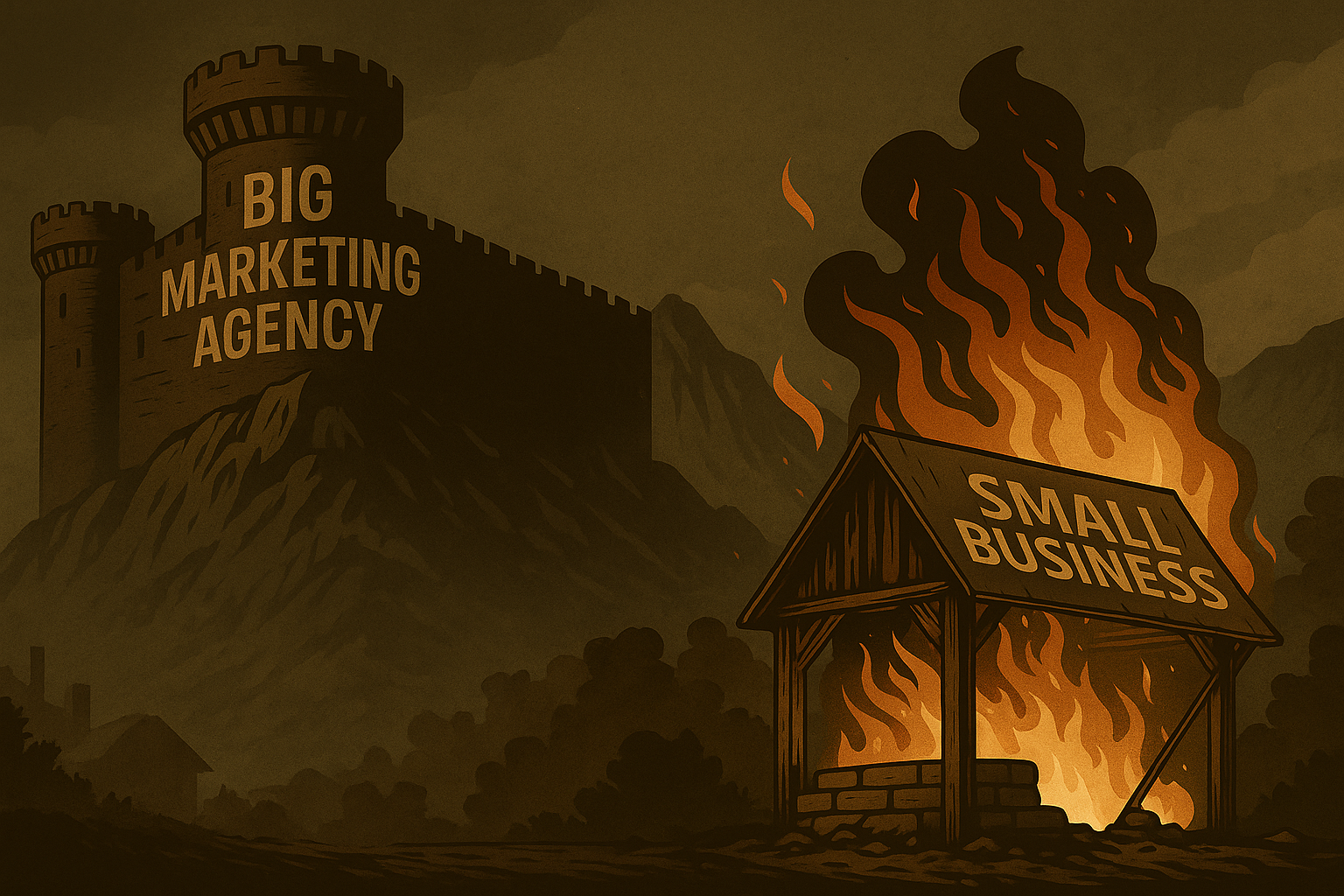
Most agencies sell smoke. We build fire. Here's why small businesses in Belfast keep getting burned—and what we do differently to guarantee ROI or die trying.
Let’s cut the crap.
Most agencies?
They’re all bark, no bite.
They show up with flashy slide decks, buzzwords, and “proprietary frameworks.”
But when it’s time to deliver?
They vanish.
You drop thousands on a strategy that ends up buried in a Google Doc.
You wait weeks to hear back - if you hear back at all.
You get performance reports that read like a horoscope.
And the ROI? If it shows up, it limps in like it just got jumped in the alley.
Sound familiar?
It should. Because we’ve been that small business on the other end of the Zoom call - nodding through the pitch, hoping this agency is “different,” and watching the invoices roll in while the results never do.
So we built the anti-agency.
A war room.
A kill squad.
An ROI-obsessed outfit built by and for small business owners who need wins now, not maybe, someday, hopefully down the line.
At Dominating Markets:
We don’t charge massive retainers upfront.
We don’t pitch fluff. We pitch performance.
We don’t hide behind “brand awareness” when the funnel’s dry.
And we sure as hell don’t eat unless we deliver.
Because this ain’t a corporate playground.
This is business warfare.
And if your funnel’s bleeding, you need medics with a f***ing M4 - not PowerPoint commandos.
We’re different. And we prove it.
Every day, we build scroll-stopping content, cashflow-driven copy, and automation systems that close while you sleep.
You don’t have time to babysit an agency.
You don’t have the cash to gamble on guesswork.
You need firepower. Fast.
So we take the risk.
You get the results.
And if we don’t deliver?
You don’t pay.
No more fluff.
No more excuses.
Just leads, deals, and domination.
Book a call and let’s talk real strategy - built for businesses like yours.
Because we don’t chase impressions.
We chase impact.

Marketing on a Budget: How to Win Clients Without Wasting a Penny
Think you need money to market? Think again. These are the zero-cost tactics Belfast businesses are using to get leads without spending a single damn penny.
Let’s kill a myth right now:
You don’t need a bloated ad budget.
You don’t need a full marketing department.
And you definitely don’t need to “go viral” to get clients.
What you need?
Sharp tools. Smart moves. And content that actually f*cking sells.
Here’s how to shake up the market - without shaking down your wallet:
🔥 Turn Testimonial Gold into a Killer Case Study
Don’t just say you got results - show them.
Pull out your best client success story. Frame the pain, the transformation, and the ROI. Now you’ve got a case study that closes clients before you even get on the call.
🎥 Chop Up Your Wins
Got a video testimonial, client call, or even a demo?
Split that into Reels. Shorts. TikToks. Carousels.
One asset = 12+ pieces of content. You stay top-of-feed while your competitors stay invisible.
📩 Cold DM Like a Sniper
Stop praying people discover you.
Pick your dream clients.
Message them with something real - “Saw this on your site. Here's a fix + 3 ways I could boost your leads.”
No fluff. Just fire.
🤖 Build a Free Chatbot
You don’t need an IT team.
Slap a free AI chatbot on your site in under 15 minutes.
It talks, it qualifies, it books. While you sleep.
✍️ Write Copy That Punches
No one buys from robots.
Write like a human. Sell like a monster.
Keep it raw. Keep it real. Speak their pain, trigger their desire, and end with a damn good CTA.
Ready to scale without blowing cash?
Book a Revenue Reboot.
We’ll break your bottlenecks, patch your funnel, and weaponise your content - no fluff, no fees upfront.
You bring the guts.
We’ll bring the firepower.

AI Chatbots for Local Businesses: Worth It or a Total Waste of Time?
Tired of babysitting your website? Belfast businesses are letting AI chatbots do the dirty work—and watching leads roll in while they sleep.
Let’s cut the fluff.
If you’re still chasing leads manually in 2025, you’re already ten steps behind.
Your website?
It’s probably leaking conversions like a broken tap. People come in, they poke around, and then they bounce. That traffic you paid for? Gone. That ad budget? Flushed.
Meanwhile, smart businesses in Belfast are flipping the game by dropping AI chatbots on their websites - and watching booked calls pile up while they sleep.
Why it works (and why you need one yesterday):
✅ 24/7 Lead Capture
This isn’t some crusty contact form collecting dust. Our AI bot grabs visitors instantly - no delays, no downtime.
✅ Prequalifies Your Prospects
No more time-wasters. The bot filters tire-kickers from ready buyers so your team only talks to people who are actually worth a damn.
✅ Automates the Follow-Up
Cold leads go warm fast. Our bot sends custom messages, follow-ups, and call reminders that feel human. (Even better than some actual humans.)
We didn’t grab one off the shelf either.
We built our own AI closer in-house. Trained it. Sharpened it. Weaponised it.
It speaks, types, and books like a seasoned rep.
It’s not just helpful - it’s dangerous (for your competition).
Want it on your site?
We’ll install it. Train it. Make it convert.
You just watch the DMs turn into deals.

How to Choose a Marketing Agency (So You Don’t Get Burnt… Again)
Before you sign with another agency, read this. The red flags, the non-negotiables, and why performance-first partnerships are the only way forward.
Let’s call it what it is-
You’ve been lied to.
You’ve been promised the world, pitched on big dreams, and slapped with an invoice before anything even happened. Then? Silence. The kind of silence only scammers and snake oil salesmen know how to deliver.
You’re not alone.
Too many good businesses get caught in the trap - fancy presentations, zero execution. Big egos, zero accountability.
Here’s how to make sure it never happens again.
1. Demand Real KPIs
Not “brand awareness.” Not “impressions.”
We’re talking cash in, cost out, leads booked.
If an agency can’t show you clear, measurable KPIs that tie back to actual revenue? Run.
2. Performance-Based or Risk-Shared Pricing
If they’re that confident, they’ll put some skin in the game.
Look for agencies offering models where they win when you do.
At Dominating Markets, we don’t ask for blind trust - we earn it. You get results, or you don’t pay. Simple as that.
3. Transparent Reporting & Communication
Weekly calls. Monthly reporting. Slack threads. Something.
You should never feel like you're guessing.
And you should never have to chase them down.
4. They Actually Get Your Business
Cookie-cutter strategies kill momentum.
You want a team that speaks your language, understands your audience, and doesn’t just plug your offer into a templated funnel.
If they can’t articulate what makes your business unique, they won’t be able to sell it.
Bottom line?
If they can’t offer a win-win deal backed by clarity, communication, and results...
Walk the f**k away.
At Dominating Markets, we take the risk.
We weaponise copy, ads, and automation to actually grow businesses.
You bring the offer - we’ll make it rain.
No excuses. No ghosting. No upfront gamble.
Just results. Or you don’t pay.
Founder, Dominating Markets